IMPORTANCE OF PRIMARY EDUCATION
August 7, 2020 2020-08-07 0:00IMPORTANCE OF PRIMARY EDUCATION
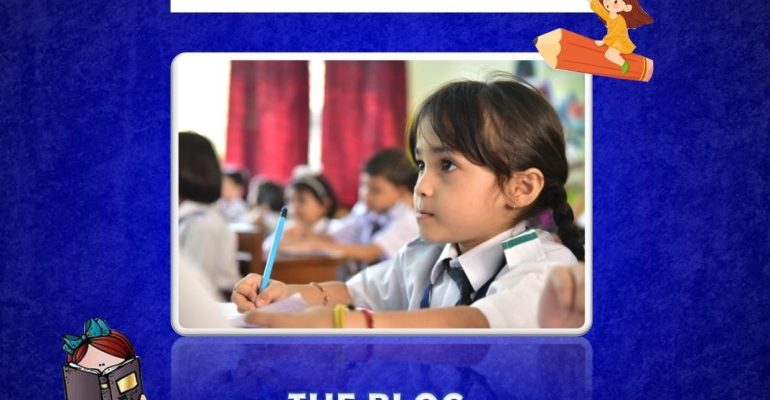
The term ‘Education’ came from a Latin word ‘Educare’, which was initiated in the mid 16th century. If one goes through its meaning, it says ‘The process of receiving or giving a systematic instruction.' Though previously it was purely based on educating at a school, college or at a university but later on it became wide in use. When we go deep into its meaning we find a word ‘refinement’ connected to it. So, we can say that education is connected to refinement of an individual morally or socially.
Education is primarily divided into two parts i.e. formal and informal. Education starts informally at homes or in a society which later on turns to be a formal; once the child is formally introduced to a school. But the saddest part is that even today lakhs of children get restricted to only the informal mode of education. Though the government of India initiated many laws to educate each individual of the nation but it is sad to say that laws are yet to reach each individual of the country.
We all know the importance of education in one’s life, be it formal or informal. But today formal education had become a necessity. Someone rightly said ‘Education is the key to success’ and yes we agree to it in each context. Education is the property of an individual which can’t be stolen and remains with the one who possesses it till death. It doesn’t mean that only an educated becomes successful, it is believed that ‘Hard work leads to success’ but if we study the ratio of the successful people we find that educated people are much stable than the people who become successful without a formal education.
We all know that to construct a building one must give importance to its foundation. A good foundation leads to a strong and tall building. Like the same way primary education is the foundation of a good education. Primary education takes a vital role of an individual’s education career. For example if a child gets a proper and better primary education it increases his/her chances to get a better education in his/her life. From the statement I didn't say that only one who got better primary education will have a better education in his/her life, it just increases the chances to make his/her life better.
Primary education is primarily the first stage of formal education, coming after pre-school and before secondary education. The role of primary education is to ensure the broad based development of the children. This means ensuring that all children are able to develop their cognitive, social, emotional, cultural and physical skills to the best of their abilities, preparing them for their future school career. But if a child lacks a better education in his/her initial days of schooling it becomes very difficult for him/her to continue his/her studies further.
Looking at the pathetic educational condition of the country the government of India launched a scheme called ‘Sarba shiksha Abhiyan’ which aimed at the universalization of elementary education ‘in a time bound manner’ under the 86th amendment of the Indian constitution making free and compulsory education to children between the age group of 6-14 a fundamental right. As an intervention program, it started in 2002 though it had been operational since 2000-2001. However its roots go back to 1993-94, when the District Primary Education Program (DPEP) was launched with an aim of achieving the objective of universal primary education.
When all the programs started facing problems and didn’t reach the target the government of India initiated a new term named ‘Right to Education Act’ which was introduced in 2009 that came into force on April 1, 2010. Some educationists and policy makers believe that with the passing of the act, Sarba Shiksha Abhiyan has acquired the necessary legal force for its implementation.
Though the central government initiated different laws to achieve the universalisation of elementary education but still lakhs of children run naked without a formal education. Mahatma Gandhi once said, “The real development of a nation is the development of the villages”. We can’t define a successful education policy looking into a city or town. But if we go to the root level we will find that the policies are restricted to the cities and towns. The villages are still deprived of the policies initiated. We can never blame the policy makers directly for the unsuccessful policies. It is the economic condition of the villages where children are used to earn a livelihood. Many children are seen in the villages who directly or indirectly, help their parents in their living process. Most of them don’t get time to go to school and in the process of earning money they leave school before they know the value of education.
The reason for the unsuccessful primary education is the teaching-learning process. The process is somewhere creating a huge gap between a learner and a teacher. Most of the schools don’t have proper teachers-learners ratio. Many schools are being run by a single teacher but the private educational institutions are exceptional to it. Due to these problems learners don’t get proper education and leave schools.
Untrained teachers is the another cause of unsuccessful primary education. Most teachers are untrained and they lack the process of teaching especially the kids. It is often seen that the methodology that the teachers use is not suitable or friendly to the young learners. ‘Enjoy a learn policy is the best possible way to teach a young learner, where he/she engages fully to grasp the desired knowledge. A child never learns in fear, so a teacher must create an environment where a child learns himself/herself. The relationship between a teacher and a student must not be like a fish and fisherman rather it should be like fish and water.
Teachers are the social reformers so they must walk extra mile to make sure whatever they impart must reach positively to the students so that the teaching learning process becomes successful. They are the one who can determine the future of the nation.
-By Pavan Upadhyay