
Unicamp Preloader

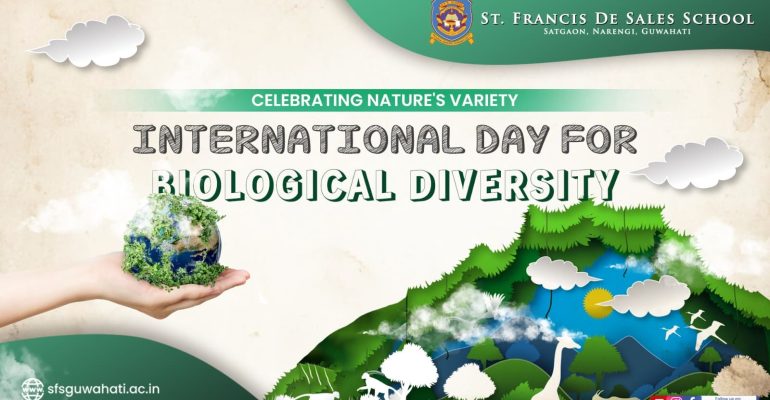
CELEBRATING NATURE’S VARIETY: INTERNATIONAL DAY FOR BIOLOGICAL DIVERSITY
Notice_4_0_16_33_59_WhatsApp-Image-2023-05-20-at-1.49.10-PM-1
Uncategorized

CELEBRATING NATURE’S VARIETY: INTERNATIONAL DAY FOR BIOLOGICAL DIVERSITY

Hello, smart friends! 
I want to throw light on a few things today. Please read the following points carefully: 
  1. More than 90 per cent of crop varieties have disappeared from farmers' fields in the last 100 years.
  2. Three-quarters of the land-based environment and about 66% of the marine environment have been significantly altered by human actions.
  3. Many domestic animal breeds have become extinct. 
  4. All of the world's (around 17) main fishing grounds are now being fished at or above their sustainable limits.
  5. Locally-varied food production systems are at risk, including indigenous, traditional and local knowledge related to those systems.
  6. One million animal and plant species are now threatened with extinction.
  7. Agrobiodiversity is on the decline along with knowledge of traditional medicine and local foods.
  8. The loss of diverse diets has led to diseases or health risk factors such as diabetes, obesity and malnutrition and has an effect on the availability of traditional medicines.
Why do you think these things are happening? Well, these things are happening because we, by our actions, are causing harm to the biodiversity around us.
Now what is biodiversity? 
Biodiversity or biological diversity refers to the myriad forms of life on Earth and the natural patterns it forms. The biodiversity we see today is the result of billions of years of evolution, formed by natural processes as well as the influence of human beings. It forms the web of life of which we are an important part and upon which we are dependent. Biodiversity also includes genetic differences within each species, for example, between varieties of plants and breeds of animals. Chromosomes, genes, and DNA determine the uniqueness of each individual and each species. Another aspect of biodiversity is the variety of ecosystems, for example, those that occur in deserts, forests, mountains, lakes, rivers, and agricultural landscapes. In each ecosystem, living beings, including humans, form a community, interacting with each other and with the air, water, and soil around them.
By now you must have guessed that biodiversity is an important aspect in our lives and it needs to be protected. So let me tell you why it needs to be protected. Biological resources are indispensable for the survival of civilisations. The loss of biodiversity threatens our food supplies, opportunities for tourism, and sources of medicines and energy. It also hampers essential ecological functions. For example, it would make no sense to replace pollination, performed by insects and birds in their everyday lives, with something else. 
Thus, to raise awareness about biodiversity and to promote biodiversity issues, International Day for Biological Diversity, also known as World Biodiversity Day, is observed on May 22, that is tomorrow. So I thought of giving you an idea of this important aspect in our lives.
Now a bit about the history of this day. The United Nations has proclaimed May 22 as the International Day for Biological Diversity (IDB) to increase understanding and awareness of biodiversity issues. When first created by the Second Committee of the UN General Assembly in late 1993, 29 December was designated The International Day for Biological Diversity. However, in December 2000, the UN General Assembly adopted 22 May as International Day for Biodiversity. This was probably done because it was difficult for many countries to plan and carry out suitable celebrations on 29 December, considering the number of holidays that coincide around that time of the year.
Theme of International Day for Biodiversity, 2023
This year's theme of the International Day for Biological Diversity is "From agreement to action: Build back biodiversity." This slogan promotes the idea that it's important to respect, protect, and repair our biological wealth. This is because despite all our technological advancements, we are completely dependent on healthy and vibrant ecosystems for our water, food, medicines, clothes, fuel, shelter, energy, etc. This year is special in terms of biodiversity conservation. We now have a renewed sense of hope with the adoption of the Kunming-Montreal Global Biodiversity Framework, a historic agreement signed in December 2022 that sets goals and concrete measures to stop and reverse the loss of Nature by 2050. And since we have an action plan agreed upon at a global level, we must implement all the measures that the agreement contemplates before 2030. By doing this, we will be able to obtain sustainable biological diversity by 2050. That is the main message from the Convention on Biological Diversity (CBD), the key international instrument for sustainable development.
Now you might wonder how we can help build back biodiversity. So here are a few things you can do at an individual level:
  1. Eat and purchase seasonal fruits and vegetables. For example, now you can eat watermelons, ridge gourds, etc. 
  2. Buy local foods. In Assam, we are blessed with so many local foods like kaazi nemu, robab tenga (pomelo), leteku, poniyol, etc. 
  3. Buy organic foods grown without pesticides and fertilisers. Try to buy from local farmers rather than from supermarkets. 
  4. Reduce your food wastage. Take only as much food on your plate as you can finish. 
  5. Try composting your food scraps at home. You can learn how to do this from tutorials in the internet. But please do it under an adult's supervision. 
  6. Reduce food packaging by using reusable bags or reusing glass jars or containers. Carry your own bag when you go shopping for fruits, veggies, or grocery. 
  7. Avoid single-use plastics like plastic straws, coffee cups, cutlery, food delivery containers, water bottles, etc. Carry your own steel/glass water bottle when you go out.
  8. Promote local and indigenous biodiversity for food and nutrition. Try to buy local foods.
  9. Reduce or eliminate the use of pesticides and fertilisers. If you have a kitchen garden, use only cow dung as manure. 
  10. Support local farms. Buy their fresh produce. 
  11. Happy biodiversity conserving! 

Leave your thought here

Your email address will not be published. Required fields are marked *

Admission Open

2026-2027
Open
Select the fields to be shown. Others will be hidden. Drag and drop to rearrange the order.
  • Image
  • SKU
  • Rating
  • Price
  • Stock
  • Availability
  • Add to cart
  • Description
  • Content
  • Weight
  • Dimensions
  • Additional information
Click outside to hide the comparison bar
Compare