
WORLD ENVIRONMENT DAY: SAY ‘NO’ TO PLASTIC
June 4, 2023 2023-06-04 0:00WORLD ENVIRONMENT DAY: SAY ‘NO’ TO PLASTIC
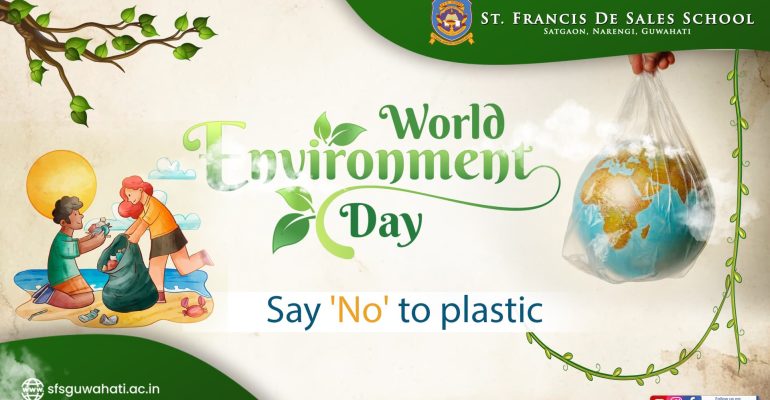
Hello, young friends!
I would like to bring to your notice the following things:
1. An estimated 19-23 million tonnes of plastic end up in lakes, rivers and seas annually. That is approximately the weight of 2,200 Eiffel Towers altogether!
2. To keep global warming below 1.5°C this century, we must halve annual greenhouse gas emissions by 2030.
3. More than 800 marine and coastal species are affected by plastic pollution through ingestion, entanglement, etc.
4. It is estimated that each person on the planet consumes more than 50,000 plastic particles per year.
5. With no action taken, plastic waste flowing into aquatic ecosystems will nearly triple by 2040.
Also, do you know what the deepest point in the ocean, the Mariana trench, and the highest mountain peak in the world, Mt. Everest, have in common? Despite being among the planet's most inaccessible places, they both contain tiny pieces of plastic from human activities miles away. Now you might wonder why I'm telling you about plastic pollution. It's because tomorrow is World Environment Day and this year's theme is to focus on solutions for resolving plastic pollution under the campaign #BeatPlasticPollution.
So, why do you think plastic is harmful?
Plastic is mostly produced from oil and gas, both of which are fossil fuels. The more plastic we make, the more fossil fuel is required, thereby worsening the climate crisis. Also, plastic products create greenhouse gas emissions across their whole lifecycle. Plastics are the largest, most harmful and persistent fraction of marine litter, accounting for at least 85 per cent of total marine waste. The world is being inundated by plastic. More than 400 million tonnes of plastic is produced every year, half of which is designed to be used only once. Of that, less than 10 per cent is recycled. Today, plastic clogs our landfills, seeps into the ocean and when burnt, turns into toxic smoke, making it one of the most serious threats to the planet. Moreover, microplastics find their way into the food we eat, the water we drink and even the air we breathe. Many plastic products contain hazardous additives which may pose a threat to our health.
Now that you know all of these facts, you can prepare yourself to take action because time is running out, and Nature is in emergency mode. We need urgent action to address these pressing issues. So let's understand why celebrating World Environment Day is important to raise awareness about these issues and also to take action against plastic pollution.
World Environment Day is the largest global platform for making the public aware of the environment and is led by the United Nations Environment Programme (UNEP) and held annually on June 5 since 1973. It is celebrated by millions of people across the world. People celebrate World Environment Day in many different ways all over the world: planting trees, cleaning up local beaches/parks, organising meetings, joining online protests, etc.
Every year, the United Nations Environment Programme (UNEP) chooses a particular issue to focus on and every year, there is a new host i.e. a city which is the centre point for all the celebrations. The idea behind celebrating the day is to draw attention to the many problems being faced by our environment. It aims to include as many people, organisations and governments as possible. It also conveys the message that positive change is possible when people work together to fight for a common cause.
This year's theme will focus on solutions to resolve plastic pollution under the campaign #BeatPlasticPollution. It is a reminder that people’s actions on plastic pollution matters. Côte d'Ivoire is the host city and is being supported by the Netherlands. Côte d'Ivoire is showing leadership in the campaign against plastic pollution. Since 2014, it has banned the use of plastic bags, supporting a shift to reusable packaging. The Government of the Netherlands is also one of the countries taking ambitious action along the plastic lifecycle. It is a signatory of the New Plastics Economy Global Commitment and a member of the Global Partnership on Plastic Pollution and Marine Litter.
Now you might wonder what we can do to celebrate this day and help in reducing plastic pollution. Well, we need to make small changes in our everyday lives. Some suggestions are as follows:
1. Awareness is important. You can share information about plastic pollution with your near and dear ones or form a group in your neighbourhood/school to organise an activity you all can undertake together. It could be collecting plastic bags from a nearby park and disposing these off properly.
2. Discarded or burnt single-use plastic harms human health and biodiversity and pollutes the ecosystem. Make sure you or your neighbours don't burn plastic. Explain the effects to them politely.
3. You can take the help of organisations like The Midway Journey to dispose off your plastic waste. They collect it from people's doorsteps.
4. Say 'no' to single-use plastic straws, cups, cutlery, plates, etc. when you buy food from vendors.
5. Carry a cloth bag when you go shopping for veggies, fruits, grocery, etc.
I'm sure all of you will do your best to beat plastic pollution and thereby follow this year's theme for World Environment Day. Let's learn to use plastic more sustainably and hope that one day, plastic pollution will be history.