TECHNOLOGY INTEGRATION IN MODERN EDUCATION: TRANSFORMATIVE LEARNING AT SFS GUWAHATI
October 19, 2024 2024-10-19 14:55TECHNOLOGY INTEGRATION IN MODERN EDUCATION: TRANSFORMATIVE LEARNING AT SFS GUWAHATI
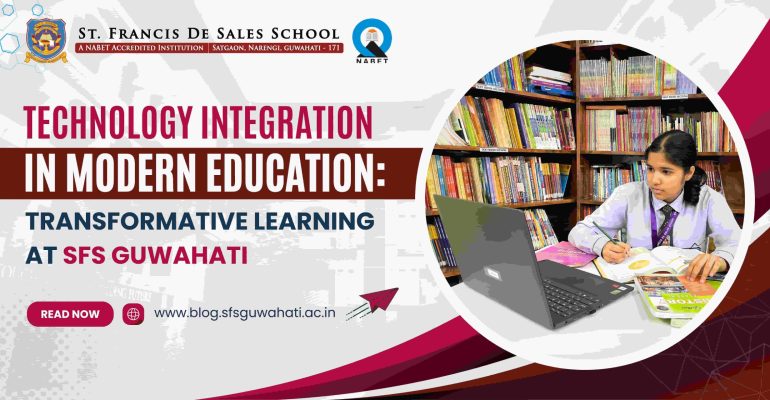
In today’s fast-evolving world, technology has transformed how we live, work, and, most importantly, how we learn. Integrating technology into education has moved beyond a trend—it has become an essential part of modern schooling. At SFS Guwahati, we believe in harnessing the power of technology to create dynamic, engaging, and personalized learning experiences for our students, equipping them for a rapidly changing world.
What Does Technology Integration Mean in Education?
Technology integration in education refers to using technological tools, platforms, and resources in a meaningful and seamless way to enhance learning. It is not merely about having computers in classrooms or digitalizing textbooks but about weaving technology into the teaching and learning process to make it more efficient and impactful. Effective technology integration fosters a more interactive and inclusive environment, enabling students to access, understand, and apply knowledge in various formats, helping them grow beyond the traditional methods of learning.
At SFS GUWAHATI, technology integration means creating a student-centered learning environment where each child can explore, discover, and excel through digital tools that suit their learning needs. Whether it’s through smart boards, tablets, or online resources, the focus is always on how technology can support deeper understanding and active learning.
How to Integrate Technology in the Classroom?
Integrating technology in the classroom involves more than introducing gadgets or educational software. It requires strategic planning, teacher training, and continuous reflection on how technology can improve learning outcomes. Here’s how we do it at SFS Guwahati:
Blended Learning Models
At SFS Guwahati, we use blended learning to combine traditional face-to-face instruction with online digital content and activities. Platforms like Desalite Connect and Google Classroom are integrated into our daily routine, where students access lessons, submit assignments, and collaborate on projects. This hybrid approach allows students to learn at their own pace, enhancing both in-class and at-home learning.
Smart Boards and Interactive Flat Panel Displays (IFP)
Smartboards are installed in every classroom to make lessons more engaging and interactive. These boards bring concepts to life with visual aids, videos, and simulations, making every subject much more engaging and easier to understand.
Personalized Learning Tools
Technology enables personalized learning, where each student receives lessons suited to their individual learning pace. We utilize adaptive learning software Desalite Connect that provides real-time feedback to teachers, helping them adjust their lessons according to student performance. This ensures that no child is left behind, and every student has the support they need to excel.
Collaborative Learning Platforms
Encouraging collaboration through technology is another integral part of our teaching model. With online tools like Google Docs and Zoom, students collaborate on projects and presentations in real time, even outside the classroom during situations of crisis. This fosters teamwork and communication skills, which are essential for their future careers.
Coding and Robotics
At SFS Guwahati, we prepare students for the future by introducing them to coding and robotics at an early stage. These subjects nurture problem-solving and logical thinking abilities, skills essential for the 21st-century workforce. Our students learn programming languages, build robots, and participate in tech fairs, keeping them at the cutting edge of technology as a part of their Co-curricular Saturdays.
The Benefits of Technology Integration in Education
Enhancing Student Engagement and Participation
One of the most significant advantages of technology integration is how it engages students. Today’s learners are digital natives, and using tech tools in the classroom makes learning more relatable and exciting for them. With interactive educational apps, quizzes, and simulations, students are not just passive learners but active participants. This results in better engagement, increased participation, and higher retention rates.
Personalized Learning for Every Student
No two students are the same, and technology helps accommodate different learning styles. At SFS Guwahati, personalized learning tools allow teachers to tailor content and exercises to meet individual student needs. Whether it’s through online quizzes that adapt to student performance or instructional videos that cater to visual learners, technology helps bridge the gap, ensuring all students can thrive.
Preparing Students for the Future
Technology is an integral part of modern life and work, and integrating it into education prepares students for the future job market. By incorporating technology in their learning, students at SFS Guwahati are developing critical skills like digital literacy, problem-solving, creativity, and adaptability, which are essential for success in any career they choose to pursue.
The Role of Teachers in Technology Integration
While technology is a powerful tool, its effectiveness depends on how well it is used by teachers. At SFS Guwahati, we invest in ongoing teacher training and professional development to ensure our educators are equipped to use these tools effectively. Our teachers learn to incorporate digital tools in their lessons, ensuring they complement traditional methods and enhance the learning experience.
Challenges and Opportunities in Technology Integration
While the benefits of integrating technology in education are immense, challenges like digital equity, screen time management, and teacher training must be addressed. At SFS Guwahati, we are committed to overcoming these challenges by promoting balanced screen time, offering support to all students, and continuously updating our teachers with the latest advancements in educational technology.
Conclusion
Technology integration in modern education is not just a trend but a necessary transformation in how we teach and learn. As a school We are committed to embracing this shift, ensuring that our students are prepared for a digital world. Through smart technology integration, we foster an environment where students are more engaged, learning is personalized, and critical skills are developed for the future. As we continue to evolve with technological advancements, we remain focused on one goal: empowering our students with the tools they need to succeed in tomorrow's world.
By integrating technology, we are not just teaching students—we are preparing them to be the leaders, innovators, and thinkers of the future.